A good chiptuning fileservice delivers checksum-corrected, tested files, keeps your original on record, and supports revisions if something needs adjusting. Judge one on calibration quality, safety margins, turnaround and support, not on the lowest price.
If you run a workshop, the fileservice you pick is the difference between a customer who comes back and a car that sits with a warning light. Here is what to look at before you send your first read.
What a fileservice actually does
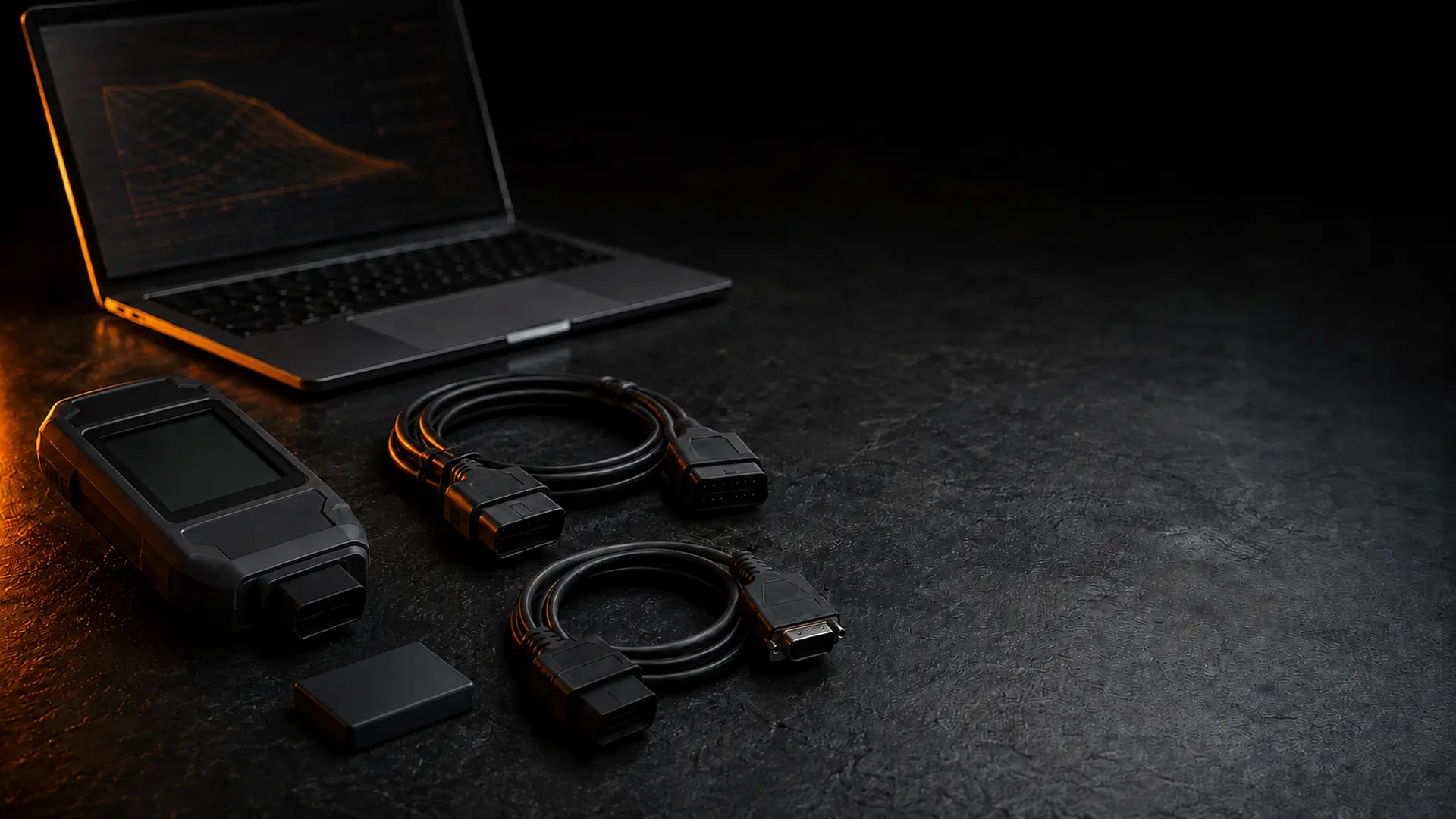
You read the stock file from the vehicle with your tool, send it in, and receive a modified, ready-to-flash calibration. A good provider builds the file to your chosen stage and options, corrects the checksum, and stands behind it with revisions and support. The file is only as good as the calibrator behind it.
The criteria that matter
- Calibration quality. Is the file built and checked by an experienced calibrator, or generated automatically with no human review? Ask how they handle safety margins on boost, fuelling and exhaust gas temperature.
- Checksum correction. Every tuned file needs corrected checksums for the ECU to accept it. This should be standard, not an extra.
- Your original file kept on record. You should always be able to return the vehicle to stock. A provider who does not keep or return your original is a risk.
- Revisions and support. Real vehicles vary. You want revision support included, so a file can be fine-tuned to the car rather than left as is.
- Turnaround. Most straightforward files should be same day. Ask how timing changes for harder ECUs or custom work.
- Tool support. The service should work with the tools you already use, such as Alientech, Autotuner and CMD.
- Coverage. Check the provider actually supports your vehicles and ECU families before you commit.
Manual file service or automatic matching
Automatic file matching is fast and fine for common, well-mapped ECUs. An engineer-built file is the better choice for anything unusual, modified or sensitive. The strongest providers offer both, so you can pick speed or a custom build depending on the job.
Red flags to avoid
- No checksum correction, or it is sold as a paid add-on.
- No way to get your stock file back.
- Power claims that sound too good for the hardware.
- One generic map reused across many different cars.
- No revisions and no real support channel when something goes wrong.
Questions to ask before you order
- Is the file reviewed by a calibrator, or fully automated?
- Are checksums corrected for my ECU as standard?
- Do you keep my original so I can revert to stock?
- Are revisions included if the car needs a small adjustment?
- What is realistic turnaround for my vehicle?
How YASTUNING approaches it
Every YASTUNING file is reviewed by an experienced calibrator, tuned within factory component tolerances and checksum-corrected for supported ECUs. Your stock file is kept on record, revision support is included, and most orders are delivered the same day. You can build a file by hand with an engineer or use automatic matching for supported ECUs.
See how the file service works, browse the tuning catalog, or read Stage 1 vs Stage 2 to get started.